Hiring · Hiring
1099-NEC Threshold for 2026: What Small Employers File in January 2027
The reporting limit for contractors jumped from $600 to $2,000. Here is who gets a form, what to collect and when to file.
- (Author)
- Esther Mwangi
- (Published)
- (Reading)
- 8 min
- (Section)
- Hiring

In this guide 9 sections
Starting with payments made in 2026, you only file Form 1099-NEC for contractors you paid $2,000 or more during the year, up from $600. Forms are due January 31, 2027. That date is a Sunday, so the practical deadline is Monday, February 1. Collect W-9 forms now to avoid backup withholding.
The 1099-NEC threshold changed for the first time in years, and the first forms under the new rule go out this winter. This guide is for owners and managers who pay freelancers, consultants or trades businesses and want a clean January. Emazoo covers the money and people side of running a small company, and this change touches both.
What Is the 1099-NEC Threshold for 2026 Payments?
The threshold is $2,000 in total payments to one contractor during calendar year 2026. The Internal Revenue Service (IRS) says the minimum for reporting certain payments, and for backup withholding on them, rose to $2,000 for tax years beginning after 2025. It may be adjusted for inflation beginning in 2027, according to the IRS instructions for Forms 1099-MISC and 1099-NEC.
Two details matter here. The test looks at the total for the year, not each invoice. And "$2,000 or more" means a contractor paid exactly $2,000 still gets a form.

Here is how the old and new rules compare for a small firm.
| Payment to one contractor | Form needed in 2025 rules | Form needed in 2026 rules |
|---|---|---|
| $450 total for the year | No | No |
| $1,950 total for the year | Yes | No |
| $2,000 total for the year | Yes | Yes |
| $2,600 total for the year | Yes | Yes |
The practical effect is fewer forms for one-off jobs. A logo designer paid $1,200 no longer triggers paperwork, but your record of the payment still matters for your own books.
Which Payments Count Toward the $2,000?
Only payments for services by a non-employee count. That includes freelancers, consultants, cleaners, bookkeepers and other self-employed people you paid by check, cash or bank transfer. Payments to a sole proprietor, partnership or single-member LLC are the usual cases. Payments to corporations are generally excluded, with exceptions such as legal fees.
Money you paid by credit card, debit card or a payment app follows a different path. The IRS instructions say card and third-party network payments are reported by the payment company on Form 1099-K, so you do not report them again on a 1099-NEC. Our guide to payment processing fees on PayPal, Stripe and Shopify shows why those platforms sit in the middle of so many payments.
Here is how the common payment types are reported.
| Payment type | Reported on | Reported by |
|---|---|---|
| Services by a freelancer, paid by bank transfer | Form 1099-NEC | You |
| Services paid by credit card | Form 1099-K | Card processor |
| Rent to an individual landlord, $2,000 or more | Form 1099-MISC | You |
| Wages to an employee | Form W-2 | You |
A Worked Example: Five Contractors, Two Forms
Consider a ten-person landscaping firm that paid five outside contractors in 2026. The bookkeeper totals each person's payments by bank transfer in December.
- Seasonal irrigation specialist: $4,800, so a form is required.
- Web designer: $2,000, so a form is required because the test is "or more."
- Equipment mechanic: $1,750, so no form is required.
- Photographer: $600, so no form is required.
- Bookkeeping freelancer: $3,100 paid by credit card, so the card processor reports it on a 1099-K and the firm files nothing.
Under the old rule, the mechanic and the photographer would also have received forms. The firm now files two instead of four, and it still needs W-9s for the two people it reports. It should also keep the mechanic's and photographer's invoices, since the lower paperwork load does not erase the expense records behind the deduction.
How Do You Tell a Contractor From an Employee?
The IRS looks at three areas: behavioral control, financial control and the type of relationship. A worker who sets their own hours, uses their own tools and invoices several clients is more likely a contractor. A worker you train, schedule and supervise is more likely an employee. The IRS explains the tests on its independent contractor definition page.

The higher threshold does not change classification. A person who should be on payroll is still an employee at $1,500 for the year. Calling them a contractor to skip paperwork can create back taxes and penalties later. If a role looks borderline, ask an accountant before the first payment, not after the last one.
Payroll costs also move on January 1, so classification errors get more expensive. Our 2027 minimum wage checklist for small employers covers the other changes to plan for.
How Do You Collect W-9s and Avoid Backup Withholding?
Ask every new contractor for a completed Form W-9 before you pay them. The form gives you their legal name, business type and taxpayer identification number (TIN). The IRS publishes the Form W-9 for free, and you keep it in your files. You do not send it to the IRS.
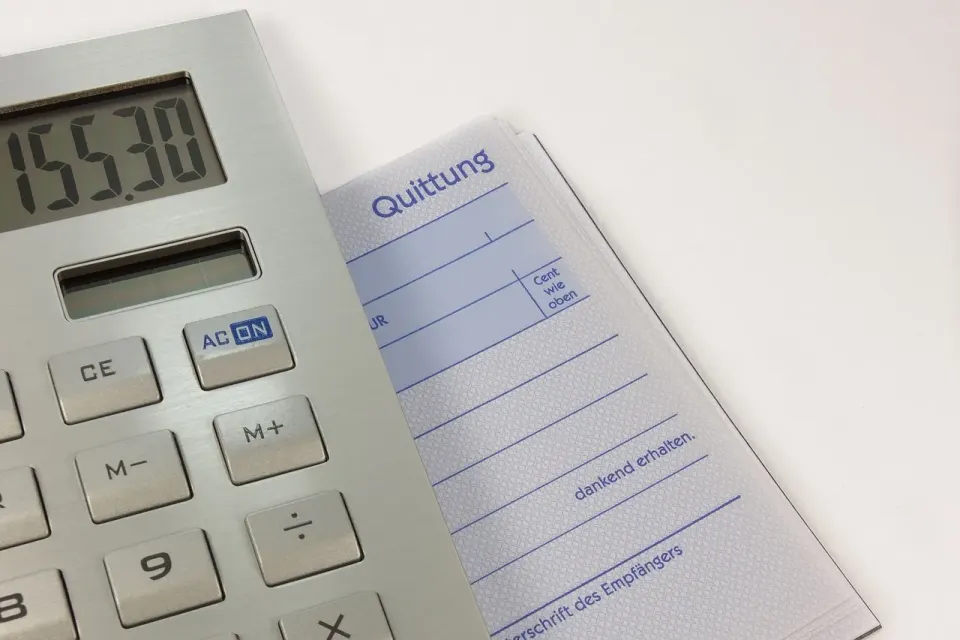
If a contractor will not provide a TIN, you may have to withhold. The IRS says the backup withholding rate is 24%. On a $2,600 payment that is $624 you must hold back and send to the IRS, which leaves the contractor with $1,976. Most people supply the form quickly once they learn that.
Store each form securely. A W-9 holds a Social Security number or an employer identification number, so keep it in a restricted folder rather than an open shared drive. Delete copies from email once you have filed them away.
A simple routine keeps this easy:
- Request a W-9 in the same email that sends your contract or purchase order.
- Hold the first payment until the form arrives.
- Save the form in a shared folder named by year and vendor.
- Export a vendor payment total each December.
Software helps with step four. If your books live in QuickBooks, check whether your plan still earns its cost before you rely on its 1099 tools, as we explain in our review of the QuickBooks Online price increase.
What Are the Filing Steps and Due Date for 2027?
Form 1099-NEC is due to the IRS and to the contractor by January 31. The IRS instructions say that when the date falls on a weekend, the due date moves to the next business day. January 31, 2027 is a Sunday, so the deadline becomes Monday, February 1. There is no automatic 30-day extension for this form.
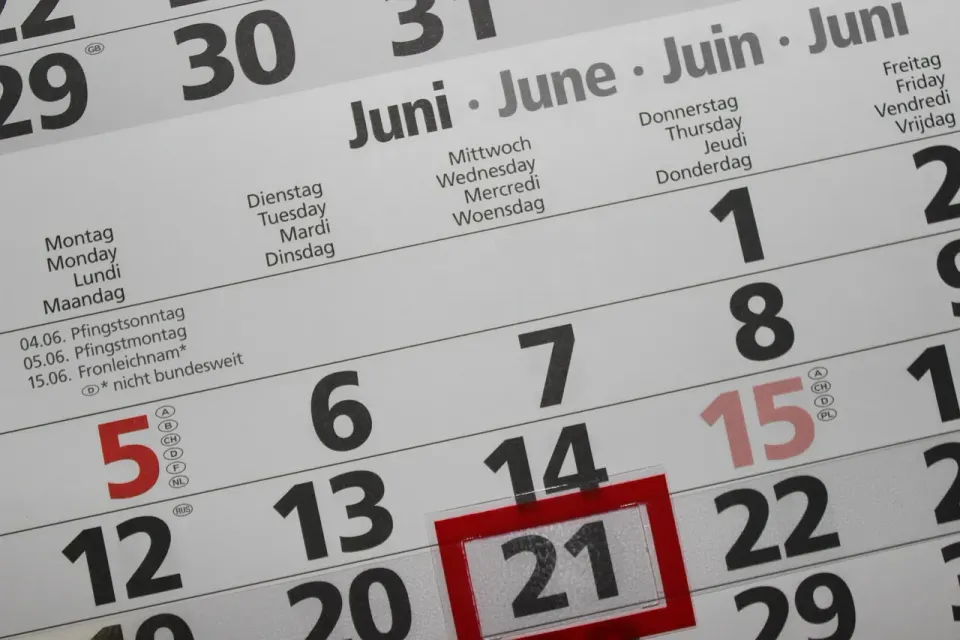
Use this order of work in January:
- Total each contractor's 2026 payments from your bank and accounting records.
- Remove card and payment-app payments, since those are on a 1099-K.
- Flag every contractor at $2,000 or more.
- Check each name and TIN against the W-9 you collected.
- File electronically and send each contractor their copy.
The IRS expects larger filers to e-file, and the rule generally applies once a business files 10 or more information returns in total. Even if you file fewer, e-filing gives you a record that the form was accepted. Payroll costs such as the 2027 wage base also need planning, and our note on the 2027 Social Security wage base covers that side.
Does the $2,000 Rule Also Cover Rent and Other 1099-MISC Payments?
Yes, for several categories. The IRS instructions list a $2,000 minimum for rents, prizes and awards, and other income payments reported on Form 1099-MISC. Royalties keep a much lower $10 minimum, and gross proceeds paid to an attorney are reported under separate rules.
The practical lesson is to check the box and the category, not just the dollar figure. If you rent a storage unit from an individual owner for $250 a month, you pay $3,000 a year and may owe a 1099-MISC. Ask your accountant how the rule applies to your lease, because corporate landlords and property managers are treated differently.
Some states run their own 1099 filing programs with separate dates or thresholds. Check your state revenue department's website each December so a state notice does not surprise you in February.
What Mistakes Cause 1099-NEC Corrections?
Most corrections come from a handful of avoidable errors. The first is a wrong name or TIN. The second is reporting a card payment twice. The third is applying the old $600 test to 2026 payments and filing forms nobody needed. The fourth is missing the contractor who crossed $2,000 through several small jobs.
Another trap is mixing reimbursements with fees. If you repay a contractor's travel costs under a clear arrangement, ask your accountant how to treat it. Rules differ by situation, and this guide is general information, not tax advice.
Late or missing forms carry penalties that grow the later you file, so a short delay costs less than a long one. If you spot an error after filing, submit a corrected form instead of ignoring it. Corrections are routine and far easier to fix in February than in the summer.
Keep a one-page note each year that records your threshold, your due date and who files. It stops the January scramble and gives a new bookkeeper something to follow.
Conclusion: Set Up the 1099-NEC Threshold Check Now
The 2026 rule is simple: file for contractors paid $2,000 or more, get W-9s before paying, and finish by Monday, February 1, 2027. Fewer small jobs trigger forms, but classification, TIN collection and accurate totals still matter. At Emazoo, we recommend running your vendor totals in early December so you can fix gaps while contractors still answer email. Your next step is to list every contractor paid this year and mark who has a W-9 on file.