Money · Pricing
How to Price a Product for Online Sale
Cost plus a guess is how most first prices are set. Here is a simple way to price from your real costs, check the margin after every fee, and sanity-check against the market.
- (Author)
- Leila Haddad
- (Published)
- (Reading)
- 2 min
- (Section)
- Money
In this guide 5 sections
Price is the number that most affects whether an online business makes money, and it is often set in five minutes. The method below takes an hour per product range and gives you a price you can defend.
Step 1: Work out the true unit cost
Add up everything it costs to get one unit ready to sell: the supplier price, inbound shipping and duties spread per unit, packaging, and any labelling or assembly. This is your landed cost.
Step 2: List every per-sale cost
For each sale, list what you pay: payment processing, marketplace or platform fees, outbound shipping you cover, packaging, and an allowance for returns. Our breakdown of marketplace fees covers the platform side.
Step 3: Calculate the contribution
Price minus landed cost minus per-sale costs is the contribution margin: what each sale contributes to rent, wages, marketing and profit.
| Line | Example |
|---|---|
| Selling price | 40.00 |
| Landed unit cost | −14.00 |
| Payment and platform fees | −5.20 |
| Shipping and packaging | −6.00 |
| Returns allowance | −1.20 |
| Contribution per sale | 13.60 (34%) |
Price for the channel
If you sell in more than one place, run the numbers for each. A price that works on your own store may lose money on a marketplace with higher fees.
Step 4: Check against the market
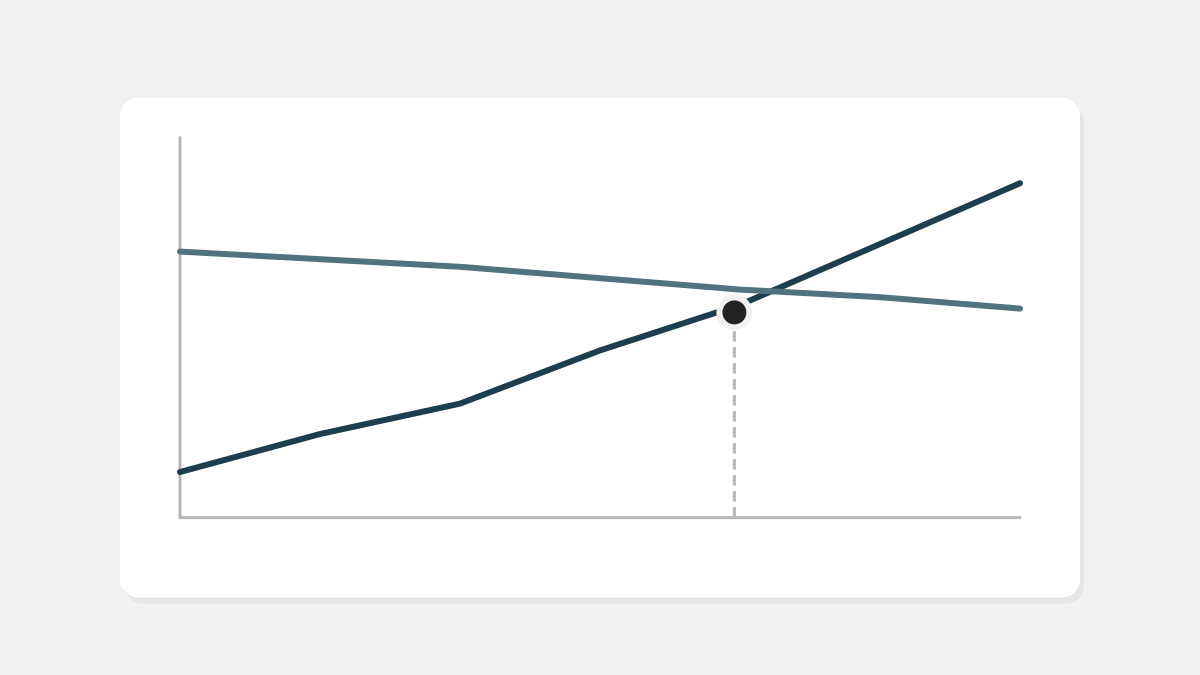
Look at what comparable products sell for. If your price is far above, your page needs to justify it; if it is far below, you may be leaving money behind. Pricing slightly above the cheapest option is often fine when the product page and service are better.
Step 5: Review when costs move
Supplier increases, courier surcharges and fee changes all erode margin quietly. Re-run the numbers whenever a cost changes and feed the results into your cash flow forecast. The SBA's finance guide is a useful general reference.
If you can't say what one sale contributes, you can't say whether more sales will help.
Good pricing and a good page work together; see the product page checklist once the numbers are set.