Selling Online · Marketplaces
What Selling on a Marketplace Really Costs: Seller Fees Explained
The headline commission is only one line. Here is every type of fee a marketplace can charge, and how to work out what you keep from each sale.
- (Author)
- Callum Reyes
- (Published)
- (Reading)
- 2 min
- (Section)
- Selling Online
In this guide 3 sections
Selling through a large online marketplace gives a small business instant access to customers it could never reach alone. That access has a price, and it is rarely just the commission rate in the headline. Once every fee is counted, two products with the same sale price can leave you with very different amounts.
The five kinds of marketplace fee
| Fee type | How it is usually charged | Watch out for |
|---|---|---|
| Account or subscription | Monthly flat fee, or a per-item fee on basic plans | Which plan is cheaper at your volume |
| Commission (referral or final value fee) | Percentage of the sale, varies by category | Whether it applies to shipping and tax as well |
| Payment processing | Percentage plus a small fixed fee per order | Whether it is included in the commission or separate |
| Fulfilment | Per unit, by size and weight, if the platform ships for you | Long-term storage and removal fees |
| Advertising | Pay per click on sponsored listings | Spend that becomes essential to stay visible |
Every major platform publishes its schedule. Before pricing a product, read the current version, for example Amazon's seller pricing or eBay's selling fees. Rates differ by category and country, and they change.
Commission is usually on the total
Many marketplaces calculate commission on the total amount the buyer pays, including shipping. If you charge separately for delivery, you may be paying commission on that too.
Work out what you keep
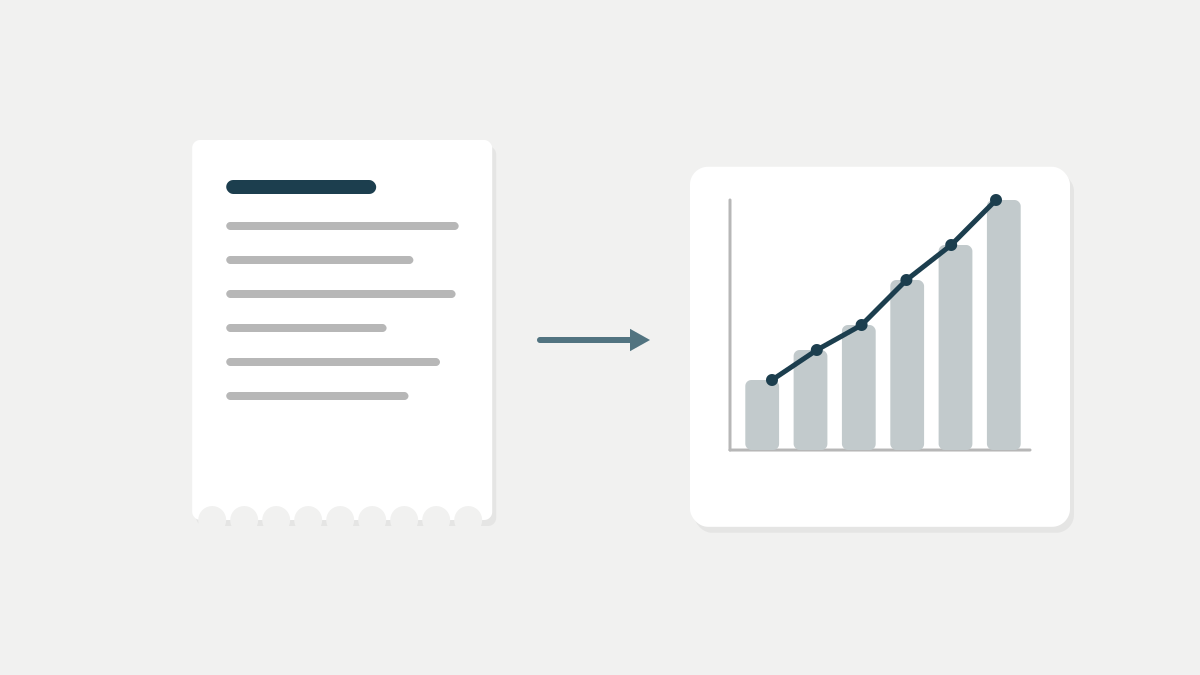
For each product, start from the sale price and subtract, in order: the commission, payment processing if separate, fulfilment or your own shipping cost, packaging, the cost of the goods, and an allowance for returns. Then divide your advertising spend by the number of units it helped sell and subtract that too. What remains is your contribution per unit.
Price from the bottom line up. A product that sells well at a loss is just an expensive way to be busy.
When your own store makes sense
Your own online store usually carries lower per-sale fees, typically a platform subscription plus card processing, but you have to bring every customer yourself. Many businesses use both: the marketplace for discovery, their own store for repeat customers. If you ship your own orders, our guide to choosing a 3PL covers when to hand fulfilment over.
Finally, remember that marketplace payouts arrive on the platform's schedule, often with a holding period, and already net of fees. Put the real payout dates into your 13-week cash forecast rather than the sale dates.