Selling Online · Channels
Your Own Online Store or a Marketplace? How to Choose Where to Sell First
A marketplace brings customers but takes a cut and keeps the relationship. Your own store keeps the margin but you have to find every buyer. Here is how to decide where to start.
- (Author)
- Leila Haddad
- (Published)
- (Reading)
- 2 min
- (Section)
- Selling Online
In this guide 4 sections
Where to sell first is one of the earliest decisions an online business makes, and it is hard to undo. The choice is usually framed as fees, but the bigger difference is who owns the customer.
What each option gives you
| Marketplace | Own online store | |
|---|---|---|
| Built-in traffic | Yes, from day one | No, you bring every visitor |
| Typical fees | Commission per sale, often plus fees | Platform subscription plus card processing |
| Customer data and email | Limited or none | Yours |
| Control of design and brand | Low | High |
| Price competition | Shown next to competitors | Shown on its own |
| Rules and account risk | Platform can change rules or suspend accounts | You set the rules |
Fee structures vary by platform and change over time. Check current schedules such as Amazon's seller pricing or Shopify's plans before modelling either option, and see our breakdown of marketplace seller fees.
When to start on a marketplace
A marketplace makes sense when you have no audience yet, sell a product people already search for by name or type, and can accept lower margins while you learn what sells. It is also a cheap way to test demand before investing in your own site.
When to start with your own store
Your own store makes sense when you already have customers, a mailing list or a social following, when your product needs explaining or a strong brand to stand out, or when repeat purchases are a large part of the business. Owning the customer relationship pays off every time someone comes back.
Don't forget the work
Your own store needs marketing to bring visitors: search, social, email or ads. Budget time and money for that, or the lower fees will not matter.
Running both
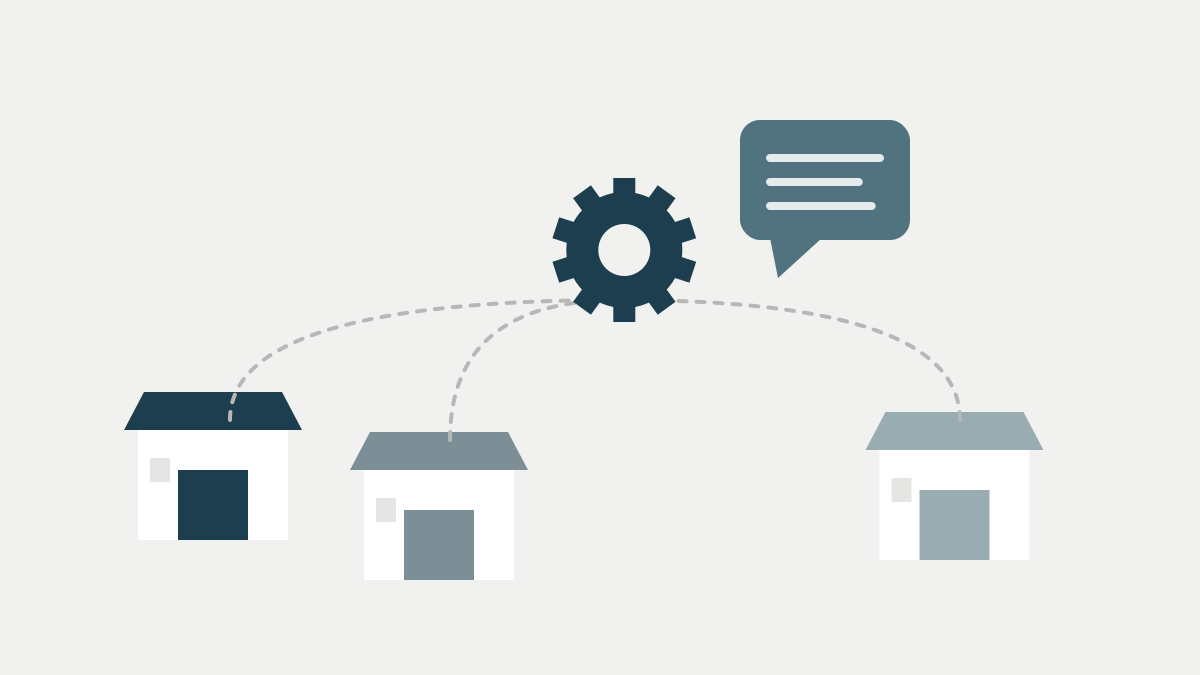
Many businesses use a marketplace for discovery and their own store for repeat customers. If you do, keep stock levels in sync to avoid overselling, keep pricing consistent with each platform's rules, and price with the higher fees in mind; our guide on pricing a product for online sale shows how.
A marketplace sells to its customers on your behalf. Your own store sells to yours.
Wherever you sell, the listing does the selling: start with our product page checklist.